
Stormwater, Erosion, and Riparian Buffer Program - General Information
The Johnston County Stormwater and Erosion Control Division manages state-delegated programs involving stormwater management, riparian buffer protection, and erosion and sedimentation control.
Page Contents
- Program Overview
- Jurisdictions
- Ordinances and Design Manual
- Staff Directory
Program Overview
Purpose
The County’s Stormwater Management Program promotes and insures the design, construction, management, and maintenance of stormwater systems to:
- Improve and enhance the quality of stormwater runoff from development
- Maximize infiltration of stormwater
- Collect and transmit excess stormwater flows in a manner to protect human health and welfare and to protect property.
- Protect and preserve downstream natural drainage ways.
The program also seeks to mitigate impacts on surface water resources from development to the maximum extent feasible.
Program Areas
The four major areas the program addresses are:
- New development
- Illegal discharge identification and elimination
- Retrofit locations for best management practices to control nitrogen export
- Public education and awareness of water quality issues.
In addition to these areas the program also promotes:
- Riparian buffer protection
- Additional stream buffers and development restrictions for protection of endangered aquatic species
- Water Supply Watershed protection
What is Stormwater?
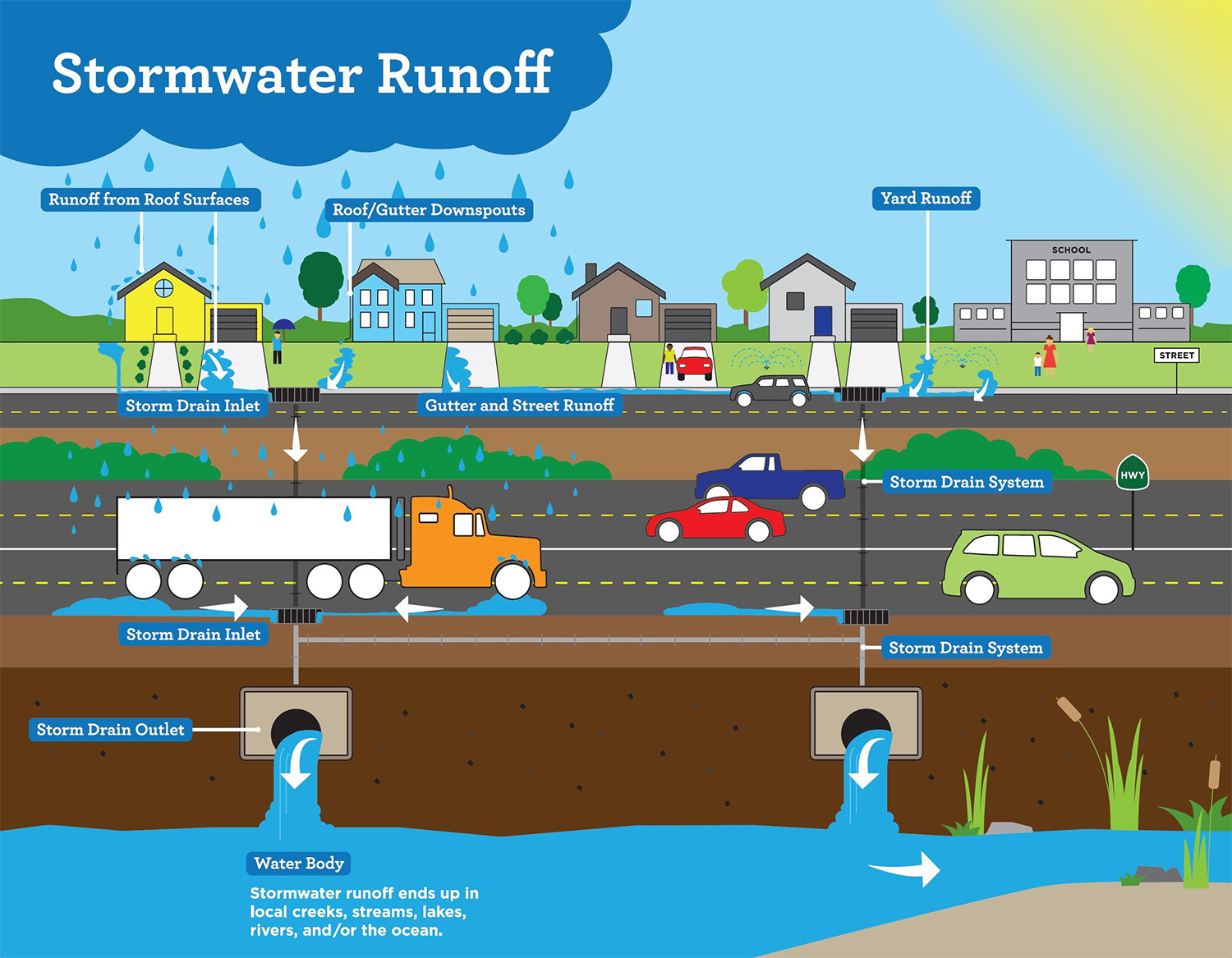
Stormwater is excess water generated when rain falls on impervious surfaces (roofs, roadways, sidewalks, driveways, etc.) or falls too fast to be absorbed into the soil. In urban areas or other developed areas, stormwater is typically transported from the land via a storm drainage system (curb and gutter, storm drainage pipes, channels, etc.) into our streams and rivers.
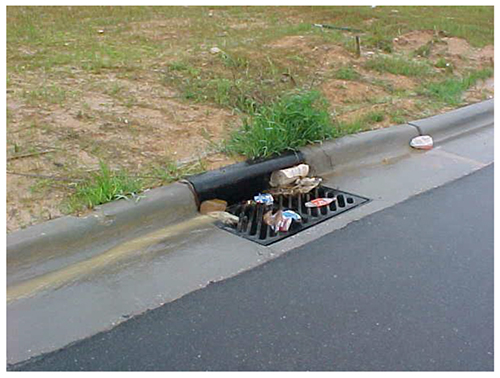
Why is stormwater a problem?
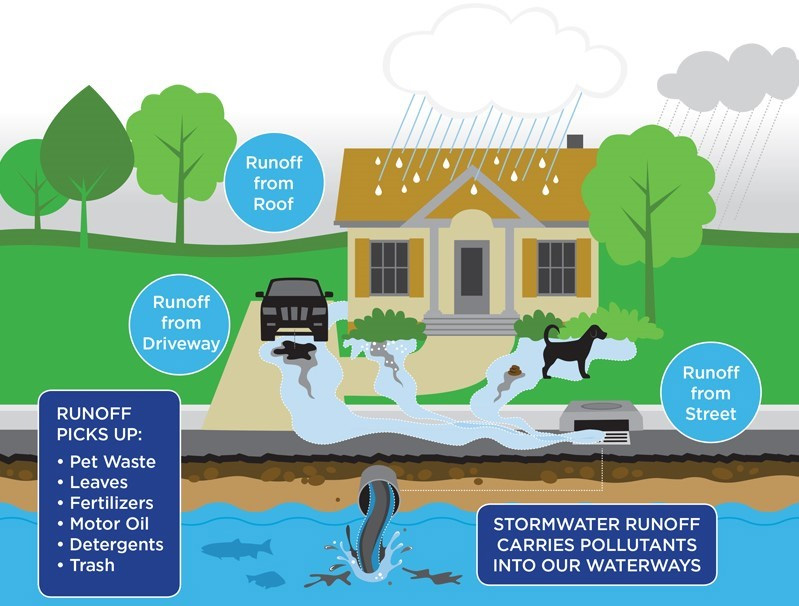
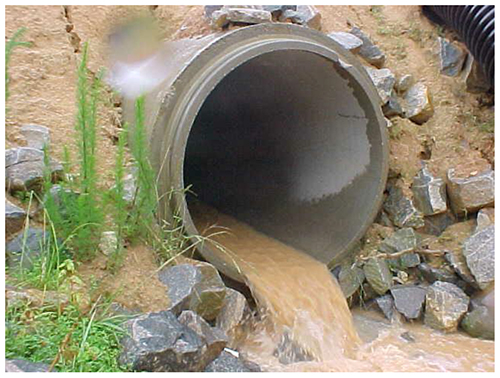
Stormwater begins as rain, but picks up pollutants (sediment, nitrogen, phosphorous, oil, grease, and other toxic substances) and litter in its path before entering the storm drainage system. These pollutants are carried directly to our streams and rivers. Some of these pollutants - such as nitrogen and phosphorous - promote algae growth. Algae consumes and depletes precious oxygen that fish and other aquatic species require. When oxygen levels get too low, aquatic animals can be weakened and even killed.
What is being done to address the problem?
In December of 1997, the Environmental Management Commission adopted rules to reduce the amount of nitrogen delivered to the Neuse River Basin from point and nonpoint sources by a minimum of 30 percent of the 1995-loading rate.
Wastewater treatment plants and industrial plants are considered point source discharges. Point source discharges are regulated under the National Pollution Discharge Elimination System (NPDES) administered through the NC Department of Environment and Natural Resources Division of Water Quality.
Non-point source discharges originate from rainfall or snow melt flowing across lawns, streets, parking lots, agricultural fields, forests, industrial sites, construction sites, etc.
In May 1998, the Johnston County Board of Commissioners adopted the Johnston County Stormwater Management Ordinance. The intent of the ordinance was to protect streams from the secondary impacts of development.
Later in 1998, the Environmental Management Commission adopted the Neuse River Basin – Nutrient Sensitive Waters Management Strategy: Basin-wide Stormwater Requirements (Neuse Rules). In those rules, Johnston County was identified as one of the 15 local governments required to adopt a Stormwater program specifically addressing nitrogen reduction. The EMC approved the revised Johnston County program in December 2000 with an effective date of March 9, 2001.
Jurisdictions
Erosion Control - Unincorporated areas of the county, outside of all towns and ETJs (extra-territorial jurisdictions)
Riparian Buffers - Unincorporated areas of the county, outside of all towns and ETJs
Stormwater - Unincorporated areas of the county, outside of all towns and ETJs except for Benson and Archer Lodge
Lot-level Stormwater - Unincorporated areas of the county, outside of all towns and ETJs
The County Stormwater Program does not have jurisdiction over some issues. For questions regarding the following, contact the indicated party.
For maintenance of public roadways, including right-of-way areas, roadside ditches, and culverts, contact the NC Dept. of Trasportation.
For Erosion Control within town limits and ETJs, contact the NC Dept. of Environmental Quality.
For stormwater control within town limits and ETJs, other than Benson and Archer Lodge, contact the respective town goverment.
For lot-level stormwater (impervious limit overages) within town limits or ETJs, contact the respective town government.
For clearing land for timber operations, contact the NC Forest Service.
For agricultural operations, contact Johnston County Soil and Water.
For beaver nuisances and streamflow rehabilitation, contact Johnston County Soil and Water.
Ordinances
Design Manual
Johnston County Stormwater and Erosion Control Design Manual
State's Erosion and Sediment Control Planning and Design Manual
State's Stormwater Design Manual
Staff Directory
Public Utilities Director - Chandra Cox Farmer, P.E.
Stormwater & Erosion Control Administrator - Jessica Batten
- Administers the Stormwater, Erosion, and Riparian Buffer programs. Performs stormwater and erosion control plan review.
- Phone: (919) 209-8333
Plan Review Consultant - Beth Umstead
- Performs stormwater and erosion control plan review.
Erosion Inspector & Buffer Calls - Charles Pender
- Performs erosion control inspections and makes riparian buffer determinations.
Erosion Inspector, Plats, and Bonds - Shannon Stanley
- Performs erosion control inspections and final plat review.
Erosion Inspector - Harrison Miller
- Performs erosion control inspections.
Lot-level Technician - Adam Miller
- Performs lot-level stormwater and erosion control plan review, including impervious limit overages. Receives general inquiries.
- E-mail: adam.miller@johnstonnc.gov
- Phone: (919) 989-5605
Administrative Technician - Tammy Johnson
- Receives submissions, takes payments, and sends general inquiries to the correct party.
- Phone (Main Engineering Line): (919) 209-8333
Page last updated: April 2, 2026