



Commissioners weigh key questions in Johnston County's next UDO
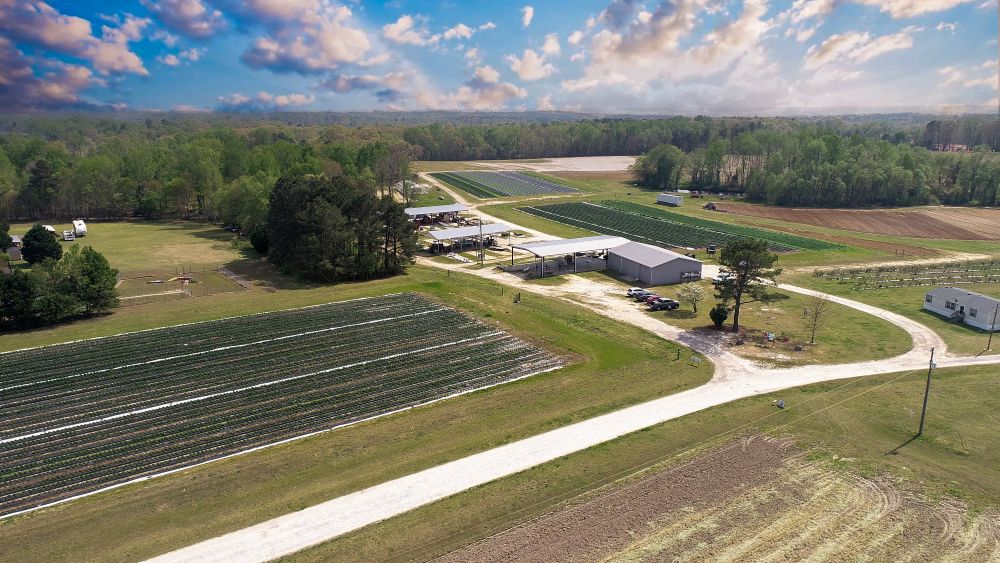 One question is how much buffer developers will have to create between their subdivisions and neighboring farms.
County Commissioners on Aug. 17 filled in some blanks in Johnston County’s proposed Unified Development Ordinance.
Commissioners expressed their preferences for minimum buffers, the subdivision-approval process, the definition of a rural crossroads, and other land-use topics.
But those preferences are not set in stone. Still to come are an information session on the latest UDO draft and at least one more public hearing on the proposed land-use rules. Commissioners will use feedback from both to make any tweaks before adopting the UDO.
Below are the issues Commissioners talked about on Aug. 17.
How much buffer?
The issue: How much landscaped buffer should a proposed development provide between its homes and a neighboring farm?
Why it matters: In a fast-growing Johnston, farmers want protection against the nuisance complaints that can stem from people living next door to farms, which can be dusty, loud and smelly. Also, they don’t want their new neighbors riding their ATVs and dirtbikes through their fields.
A nuanced argument: Clearly, a substantial buffer would offer the greatest protection, and some farmers have said they favor buffers of 75 to 150 feet. But others want something less, and here’s why: A buffer takes land that a developer otherwise could use for houses. The wider the buffer, the fewer houses a developer potentially can build on a particular tract. That matters to farmers who might someday want to sell their land because a developer who can build fewer houses may be willing to pay less for the property.
What Commissioners favor: A majority opted for a 35-foot buffer, though they encouraged planning staff to consider incentives for developers who create much wider buffers. The UDO might, for example, require less intensive — and therefore less costly — landscaping for buffers of 50 or 75 feet.
What they said: While no one voiced outright objection to a 35-foot buffer, Commissioners were clearly divided on the topic. Commissioner Ted Godwin: “It’s a complicated issue. I’ve heard from a lot of farmers who say, ‘The 75-foot buffer is adequate and it protects us.’ And I’ve heard from other farmers who say, ‘If you do that, you’re going to diminish my land value for the future.’ I think the 75-foot is reasonable when you look at this from 35 feet to 150. While I’m sensitive to what some of those farmers have said about the value of their land, we’ve had a lot more feedback that an acceptable buffer is needed right now.” Commissioner Butch Lawter: “The larger the buffer, the less developable land that farmer is going to have to sell and he’s likely going to get paid less.”
Who approves subdivisions?
The issue: For the new UDO, staff had recommended that the Planning Department approve subdivisions of 49 or fewer lots.
The rationale: In rural Johnston, most land is zoned for agricultural and residential use. That means folks don’t generally need the County’s permission to build houses; it just means their subdivisions must meet the standards the County sets for street width, front, back and side setbacks from neighboring lots, impervious surfaces, stormwater runoff, and the like. Staff, with its expertise, can make those determinations. “Most local governments have moved to this administrative level of review because you either meet the standards or you don’t meet the standards,” County Attorney Jennifer Slusser said. “There’s not any discretion that’s associated with that.”
What Commissioners favor: They want to give Planning Department staff the ability to approve subdivisions of 19 or fewer lots. The Planning Board would then approve or deny subdivisions of 20-49 lots, while Commissioners would OK or reject subdivisions of 50 or more lots. The Planning Board would still review those subdivisions but make a recommendation to Commissioners.
What they said: Commissioners want to continue to give the public a chance to weigh in on subdivision proposals. Commissioner Bill Stovall: “By making fewer than 50 administrative review, all public comment opportunities seem to have been eliminated. And I don’t think that’s going to go over well with the citizenry because we’ve heard repeatedly that they want more opportunity to comment on these growth issues.” Stovall also said that Commissioners should have skin in the game. With staff-only review and approval, “they don’t have an elected official to hold accountable,” he said. “Part of what they want is accountability here.”
Agriculture in subdivisions
The issue: Earlier this year, Commissioners had told planning staff to rid the proposed UDO of any curbs on agricultural activities in subdivisions. Planning staff wanted to make sure that was still the case. “Was the intent there to remove all of this language?” asked Planning Director Braston Newton.
Why it matters: It’s possible that some homeowners in subdivisions might not want to live next door to chickens, goats, sheep, cows, horses or seasonal produce stands. And as Commissioner April Stephens noted, some subdivisions in Johnston might not have covenants governing farm animals and the like. “Not all subdivisions have HOAs,” she said, referring to homeowner associations. “And in some subdivisions, the covenants expire after so many years.”
What Commissioners favor: Ultimately, the Board stayed with its earlier decision to remove all curbs on agriculture in subdivisions. They decided that subdivisions were better suited to govern themselves and that animal-cruelty laws would allow the County to intervene if any animals were mistreated.
What they said: Commissioner Bill Stovall: “The major complaint we heard from the citizens is that they don’t want our UDO to become basically an HOA-type document. They saw regulation of livestock and certain agricultural activities in a residential setting to be the purview of an HOA as opposed to having the government regulate that. I tend to support that contention.” Stovall conceded that some HOAs can be overbearing while others are ineffectual. But “whether or not they’re effective really is up to the residents who live there,” he said. Commissioner Butch Lawter: “There’s probably a better place that we can address this rather than in our UDO.”
Calculating subdivision density
The issue: Should the County use gross or net acreage to calculate a proposed subdivision’s density, or the number of houses allowed per acre?
Why it matters: Using gross acreage to calculate density can be deceiving. Say a local government allows one house per acre. Using gross acreage, a 100-acre tract could accommodate 100 houses. But what if 50 of those acres were unusable for houses, perhaps because they were wetlands? Under a gross-acreage calculation, that wouldn’t matter; the developer could still build 100 houses. He’d simply be building them on 50 usable acres rather than 100, effectively reducing the average lot size to one-half acre. That has been an issue in some communities, upsetting neighbors and elected leaders.
Why it might not matter here: Johnston County doesn’t calculate subdivision density based on acreage. Instead, the County requires housing lots in rural Johnston to be at least 30,000 square feet, or about seven-tenths of an acre. That requirement would apply regardless of whether the County used gross or net acreage. So if a developer had a 100-acre tract with 30 unusable acres, he would still have to provide lots of at least 30,000 square feet on the remaining 70 acres.
What Commissioners favor: Gross acreage over net acreage. One reason was the 30,000-square-foot minimum lot requirement. The other was legal. The N.C. General Assembly has barred local governments from “downzoning,” which generally means reducing the development potential of a property. “One definition of downzoning is decreasing the development density of land to be less than was allowed under the previous usage,” explained Chad Essick, an attorney with Poyner Spruill. Johnston County’s current UDO uses gross acreage. “So from my perspective, moving to a net density calculation would come with some legal risk,” Essick told commissioners.
What they said: Commissioner Ted Godwin: “That minimum square footage dictates what can happen regardless of whether it’s net or gross.”
What’s a ‘rural crossroads’?
The issue: Before Commissioners’ Aug. 17 discussion, the proposed Unified Development Ordinance made little distinction between a rural crossroads and a regional mixed-use center.
Why it matters: “A regional mixed-use center typically is a more intense development,” explained County Planning Director Braston Newton, noting that it allows larger-scale buildings. “A rural crossroads place type is a much smaller scale truly intended for rural development.” Think of the difference between a Dollar General store and a Walmart Superstore. Commissioner Ted Godwin pointed to the intersection of N.C. 42 East and Thanksgiving Fire Road, home to Hudson’s Hardware. Newton called that a good example. “To me, that’s more of a rural crossroads,” he said. “The regional mixed-use center would be something, say, like the interchange of N.C. 210 and I-40.” And yet under the proposed UDO, “rural center and rural crossroads are basically the same thing,” Newton said. “They are not. Let’s separate them.”
What Commissioners favor: Like Newton, they want rural crossroads to remain more rural in character.
Lot sizes in sensitive areas
The issue: Should all residential lot sizes in rural Johnston be a minimum of 30,000 square feet, or should lots in environmentally sensitive areas and water supply watersheds remain 40,000 square feet?
Why it matters: Planning staff said one minimum lot size would be easier to administer than two. And they said state-driven changes in stormwater rules had made 30,000-square-foot lots just as effective in protecting land in ESAs and watersheds. “The 40,000-square-foot in the ESA and water supply watershed doesn’t really have any impact now with the change in our stormwater ordinance,” said Planning Director Braston Newton.
What Commissioners favor: They stuck with 40,000 square feet for two reasons. Given the state’s ban on downzoning, if Johnston changed its rule, the County might not be able to backtrack if it saw a need. Also, protecting water supply in a growing County is paramount.
What they said: Commissioner Bill Stovall: “If we’re truly going to preserve rural character and maximize our natural resources, I think we need to keep this in place. I think there are too many variables out there that could come back to haunt us, not the least of which is a legal challenge to stormwater rules.”
Page last updated on: September 14, 2026