



Study underscores need for balanced growth in Johnston County
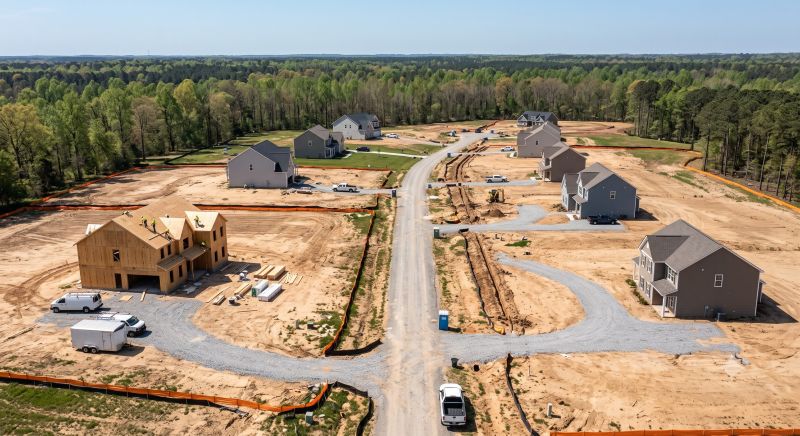 For every $1 they pay in taxes, homes demand $1.43 in services, according to a new study.
SMITHFIELD — County Commissioners now know what homes, businesses and farms demand in services compared to what they pay in taxes.
Not surprisingly, homes consume more in public services than they pay in taxes, while farms and businesses, including industries, provide a net plus in revenue.
And that’s “because businesses don’t send children to school,” explained Crystal Morphis, head of Creative Economic Development Consulting. “Businesses don’t use human services.”
Morphis’ firm recently completed a study of how much homes, businesses and farms pay in various taxes and how much they demand in services.
Here’s what she found: In fiscal year 2024-25, homes accounted for roughly $231 million in County revenue but used about $329 million in services. Business and industry paid $142.5 million in taxes but demanded just $32.4 million in services. Farms paid about $2.28 million in taxes but used only $1.84 million in services.
Put another way, “the County receives $4.40 in revenue for every dollar it expends on commercial uses,” Morphis said. “The ratio for ag is positive as well.”
Housing is a different matter. “Residential costs the county $1.43 for every dollar it receives in revenue,” Morphis said.
That’s not an indictment of housing, she said. “Businesses need workers, and workers need housing,” Morphis said, adding that the housing supply should vary because the workforce is varied. “Businesses need all types of workers — skilled, semi-skilled, unskilled,” Morphis said.
But while counties need housing, that can’t rely solely on residents to pay the bills, Morphis said. “The data reinforces why communities would not want to be primarily a bedroom community,” she said. “Those communities that have 90% of their tax base as residential do not have a sustainable revenue stream for the public services that they are offering citizens.”
What’s needed is a healthy mix of residential, commercial and agriculture, Morphis said. “All of this works together,” she said. “Businesses need workers, and workers need a place to live.”
Quality of life matters too, Morphis said. “People want to live in a place that has green space and parks, they want to live in a place that has amenities, and they want to have housing options,” she said.
Housing plays a critical role in a county’s economic vitality, Morphis said. “Businesses want to be able to recruit lots of different types of workers with varied housing options,” she said. “So even though residential does not pay for the level of public services that government provides, it’s extremely important to think about the balance in the community.”
“Because rooftops,” Morphis said, “will bring the type of retail that you want, and businesses need those rooftops because they need workers. It’s all intertwined.”
To the extent they can, Johnston leaders need to pull the right levers, recruiting the likes of Grifols and Novo Nordisk to both employ Johnston residents and help pay for the services County residents will need, Morphis said. “If you have a lever where you have more capital intensive companies, they’re paying a greater share and then your residents get more public services for their taxes,” she said. “If you have less capital intensive companies, then residents are going to pay a greater share for public services.”
Morphis encouraged Commissioners to use her Cost of Community Services Study to help inform planning and zoning decisions. “Communities like yours, especially fast-growing communities, grapple with a lot of growth,” she said. “And this type of analysis provides some information to help you with that decision-making.”
County unveils Fiscal
Impact Model
SMITHFIELD — County Commissioners now have a tool to gauge how proposed developments would affect services.
Creative Economic Development Consulting has created a Fiscal Impact Model, essentially a spreadsheet to help inform land-use decisions in Johnston County.
The model contains many data points — the number of school-age children per household, per-pupil spending in Johnston, the typical number of gallons a household uses in a month, the property tax rate.
Knowing those things can help the County weigh the impact of, say, a proposed subdivision of 100 homes.
“You can look and see whether the schools are nearing capacity or above capacity before you approve a development,” Crystal Morphis, head of Creative Consulting, told County Commissioners on June 15.
The County could also determine whether it had the available water capacity to serve those 100 homes.
“Inputting that data will show the impact,” Morphis said.
Because the model is a spreadsheet, the County can update the data points if conditions change — if, for example, the number of school-age children per household rises or falls.
“We also know the per-pupil spending in this last fiscal year, and that can be updated as well,” Morphis said.
“The Fiscal Impact Model is a dynamic model,” she said. “It is designed for your staff to update and use on an ongoing basis.”
Morphis called the model a “good planning tool” the County can use to strike a balance between residential, commercial and agricultural land uses.
“The Fiscal Impact Model is a way to look forward and make projections that will help with land-use planning and decision-making,” she said.
Page last updated on: July 13, 2026