


County's opioid crisis is easing, Health Department reports
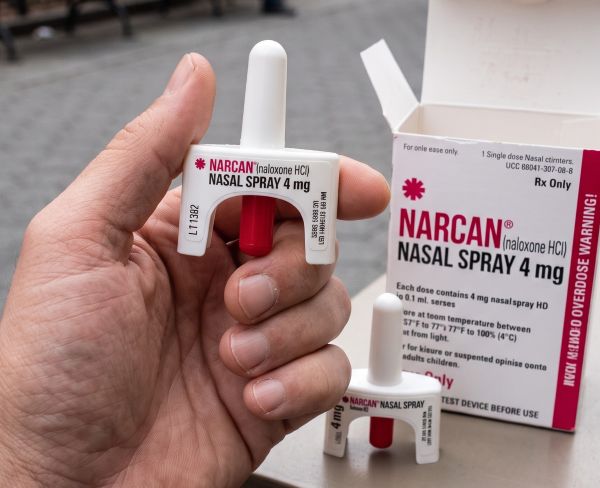 Johnston County uses some of its national settlement dollars to supply Narcan to the community.
SMITHFIELD — Since 2023, Johnston County has used national settlement dollars to ease its opioid crisis.
Its efforts are paying dividends, Steve Strickland, assistant director of the Johnston County Public Health Department, told County Commissioners on June 15.
He compared hospital emergency department visits for opioid overdoses in April 2026 and April 2025.
“In ’26, we had 10 opioid overdose ED visits in Johnston County; in ’25, we had 27 visits,” Strickland said, noting that overdoses are mainly from prescribed medications, not illicit drugs.
North Carolina is seeing encouraging trends too, Strickland said. “Emergency department visits are down as much as 50% across the state,” he said. “Fatal overdoses have dropped by almost 34%.”
“We’re making very positive strides,” Strickland said.
To continue that progress locally, the County partners plan to spend $1.58 million in the year ahead on the following strategies:
- Collaborative strategic planning — $203,460. The money will fund a full-time coordinator to lead the Johnston County Opioid Task Force, coordinate more than 100 community partners, oversee strategic planning, and ensure compliance with reporting requirements for opioid settlement funds.
- Evidence-based addiction treatment — $99,500. The money will pay for detoxification services, medications for opioid use disorder and transportation to treatment.
- Recovery support — $125,882. These dollars will train certified peer support specialists and fund one full-time and one part-time peer support specialist. These specialists will work with the Opioid Task Force and the Post Overdose Response Team, or PORT, to connect people in recovery with ongoing support.
- Employment-related services — $100,000. This new strategy will partner with V.O.I.C.E. Therapeutic Solutions to train and employ 30 peer-support professionals. The program creates employment opportunities for individuals with lived experience of opioid use disorder and involvement with the justice system.
- Early intervention — $200,000. This ongoing program focuses on preventing substance use among youth by partnering with the Alice Aycock Poe Center and Johnston County Public Schools. The funding will support prevention education, parent and staff training, a substance use intervention coordinator, and increased family and community engagement.
- Naloxone distribution — $152,250. These dollars will purchase and distribute naloxone to EMS stations, fire departments, schools, law enforcement, the Department of Social Services, churches, recovery organizations, and other community partners to reduce overdose deaths.
- Community Narcan training — $1,500. The funding will provide training for community members on how to recognize an opioid overdose and properly administer naloxone. The aim is to increase the number of people prepared to respond during an emergency.
- Post Overdose Response Team, or PORT — $597,500. The largest single investment, this strategy will fund four full-time community paramedics to respond after overdoses, administer naloxone and buprenorphine when appropriate, and connect individuals to treatment, recovery services, health care, and other support resources.
- Reentry programs — $100,000. Another new strategy, this initiative will help people leaving jail access addiction treatment, recovery support, harm-reduction services, primary health care, and other community resources.
The Health Department contracts with service providers on many of the above strategies but holds them accountable, Strickland said. “With every program that we contract with, we get monthly financial reports from them,” he said. “On top of that, we meet with each of these folks quarterly to make sure they follow the guidelines.”
Together, the Health Department and its partners are getting the job done, Strickland said. “We think the quality of the service we’re putting in place is very effective,” he said.
Page last updated on: July 13, 2026