
UAV, UAS, and Drones
Flying a Drone Near Johnston Regional Airport
What recreational and commercial drone operators need to know before operating near or from JNX
Before You Fly
1. Check the airspace and current restrictions
Before every flight, use an FAA-approved B4UFLY service to check controlled airspace, nearby airports, Temporary Flight Restrictions, special-use airspace, and other location-specific restrictions. Airspace conditions can change; do not rely solely on a previous flight or a drone manufacturer's application.
2. Know which operating rules apply
Recreational operations. A flight qualifies as recreational only when it is conducted strictly for personal enjoyment. Recreational operators must:
- Complete the free Recreational UAS Safety Test (TRUST) before flying and carry proof of completion.
- Follow the safety guidelines of an FAA-recognized community-based organization.
- Keep the drone within visual line of sight and yield to all crewed aircraft.
- Comply with FAA registration, Remote ID, altitude, and airspace requirements.
Business and other non-recreational operations. Flights conducted for a business, employer, government agency, nonprofit organization, school, property inspection, photography assignment, or another purpose besides personal enjoyment are generally governed by 14 CFR Part 107. These operations normally require an FAA Remote Pilot Certificate, drone registration, compliance with Part 107, and any necessary airspace authorization or waiver. A flight does not automatically qualify as recreational simply because the operator is unpaid.
3. Register and comply with Remote ID
Recreational drones weighing 0.55 pound (250 grams) or more must be registered with the FAA. Drones operated under Part 107 must be registered regardless of weight. Operators must mark the drone as required and carry proof of registration. Drones required to be registered generally must also comply with Remote ID unless an authorized exception applies.
Operating Near JNX
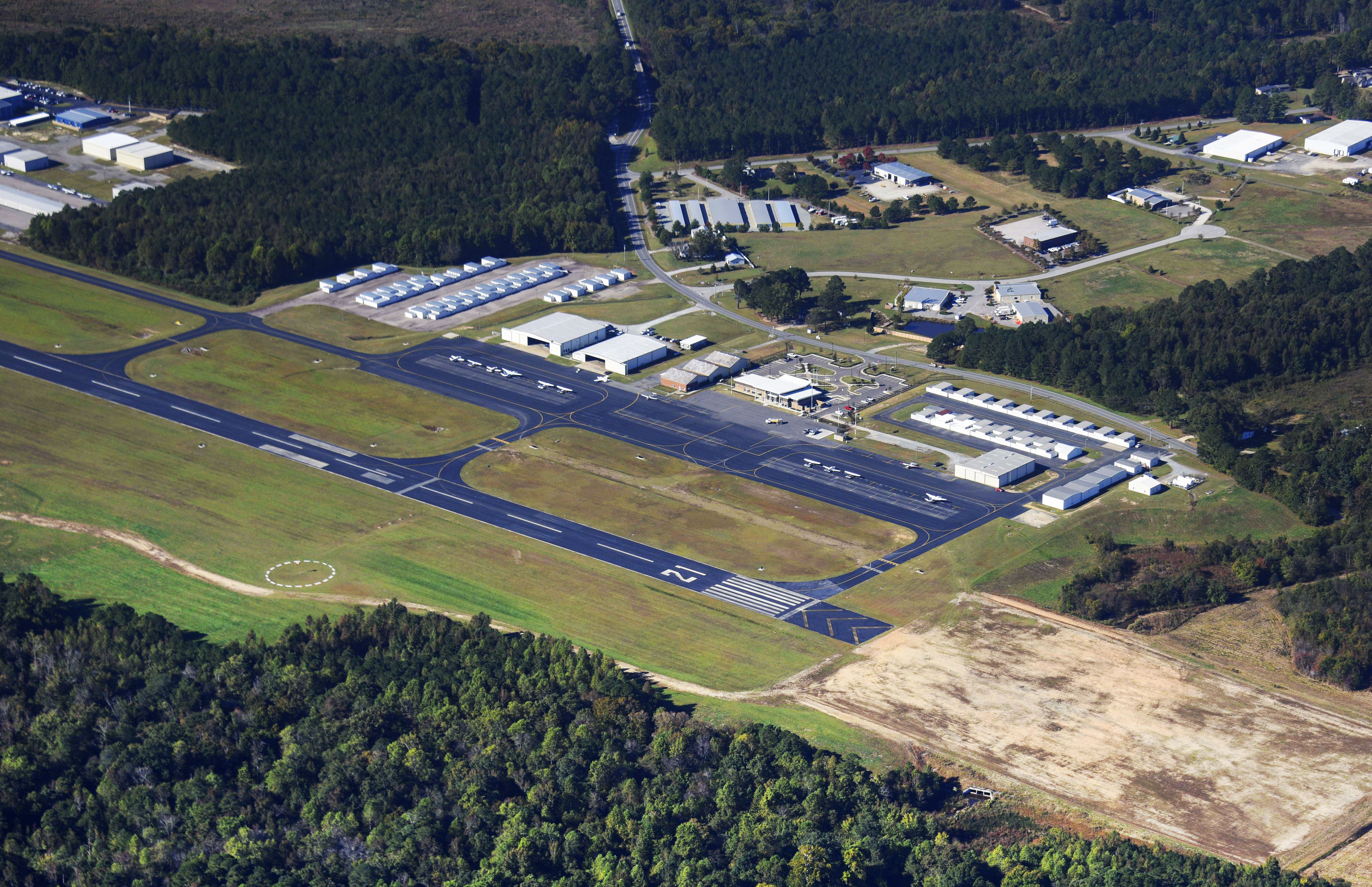
JNX is currently a non-towered airport, and the airspace at the surface around the Airport is generally uncontrolled Class G airspace. FAA airspace authorization is not ordinarily required for a drone operating in Class G airspace at or below 400 feet above ground level. The absence of an airspace-authorization requirement does not mean that it is safe to fly anywhere near the Airport.
Drone operators near JNX must:
- Remain clear of Runway 03/21, its extended centerlines, the airport traffic pattern, and aircraft approach and departure paths.
- Remain alert for low-flying aircraft and yield the right of way to every crewed aircraft.
- Never fly over or across an active runway or taxiway.
- Keep the drone within visual line of sight and within the altitude allowed by the applicable FAA rules.
- Immediately descend, move away, or land if an aircraft approaches.
- Check current Temporary Flight Restrictions and other restrictions before every flight.
Operating To, From, or At JNX
Under Section 3(E) of the Johnston Regional Airport Rules and Regulations, model aircraft and unmanned aerial vehicles or systems may not be operated to, from, or at the Airport without the prior written permission of the Airport Director. This applies when launching, landing, or operating a drone from Airport-owned or Airport-controlled property.
An operator must not enter the Airport Operations Area, including runways, taxiways, aprons, ramps, or secured airfield areas, without authorization. A tenant's gate code, key, leasehold access, or invitation does not by itself authorize a drone operation or unrestricted airfield access.
If approved, the operation must:
- Use only the location and time authorized by JNX.
- Follow all conditions and instructions issued by the Airport Director or Airport staff.
- Comply with JNX Rules and Regulations and all applicable FAA requirements.
- Avoid interference with aircraft, vehicles, personnel, emergency services, and airport operations.
- Meet any applicable access, escort, insurance, indemnification, or safety requirements.
Commercial operators proposing to provide drone or other aeronautical services on Airport property may also be required to obtain an operating agreement or permit and comply with applicable provisions of the JNX Minimum Standards.
Airport Coordination and FAA Authorization Are Different
The former federal requirement to notify an airport merely because a recreational drone flight is within five miles no longer applies. When controlled airspace is involved, the operator must obtain any required authorization from the FAA through an approved LAANC provider or FAA DroneZone. Johnston Regional Airport cannot issue an FAA airspace authorization.
Conversely, FAA airspace authorization does not grant permission to enter or operate from JNX property. When applicable, the operator must obtain both the required FAA authorization and written permission from JNX.
Although notification is not automatically required for every lawful off-airport flight near JNX, operators planning a flight close to the Airport, a runway centerline, or the traffic pattern are strongly encouraged to coordinate with JNX Airport Operations at (919) 934-0992.
Coordination with JNX does not constitute FAA airspace authorization and does not relieve the operator of responsibility for complying with all applicable requirements.
Remember
Drones are aircraft. Drone operators must avoid crewed aircraft—not the other way around.
If there is any doubt whether an operation can be conducted safely without affecting airport traffic, do not fly.
References
- Johnston Regional Airport Rules and Regulations, adopted August 19, 2024 — Section 3(E), Limits on Aeronautical Activities, and Section 6, Security.
- JNX Minimum Standards for Aeronautical Activities, adopted December 21, 2020 — Parts I, IV, and V regarding Airport operators and permits.
- FAA: B4UFLY
- FAA: The Recreational UAS Safety Test (TRUST)
- FAA: Recreational Flyers
- FAA: Certificated Remote Pilots and Commercial Operators
- FAA DroneZone
- FAA: Remote Identification of Drones
- FAA: Flying Near Airports
- FAA: UAS Data Exchange (LAANC)
Page last updated: October 5, 2026

General Aviation's best approach to the Triangle Region