Freedmen's Schoolhouse Slides
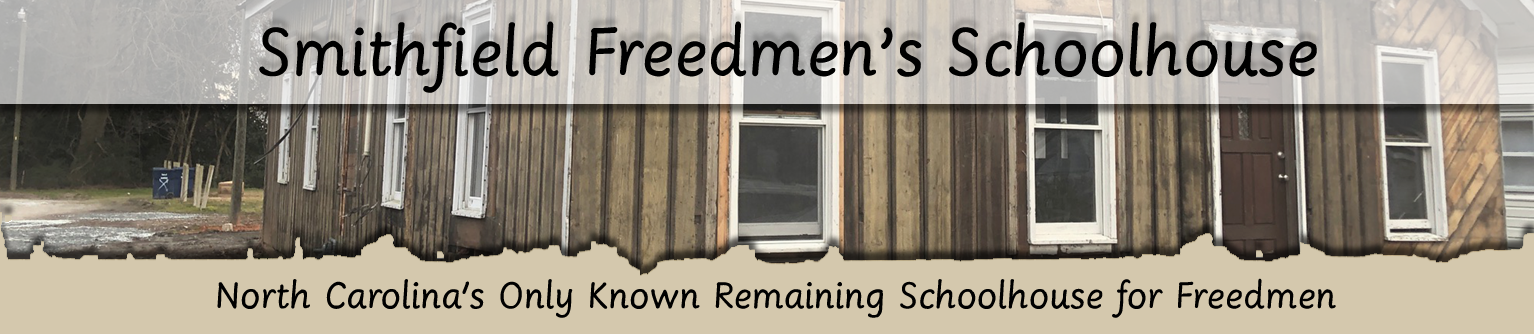
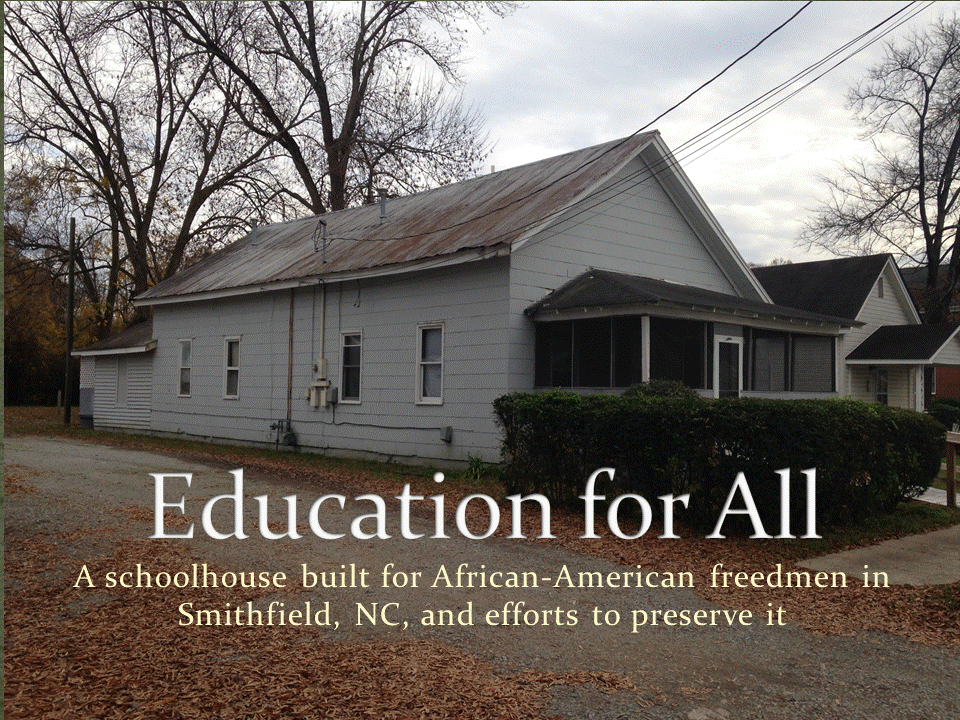
Education for All
A schoolhouse built for African American freedmen in Smithfield, North Carolina and efforts to preserve it.
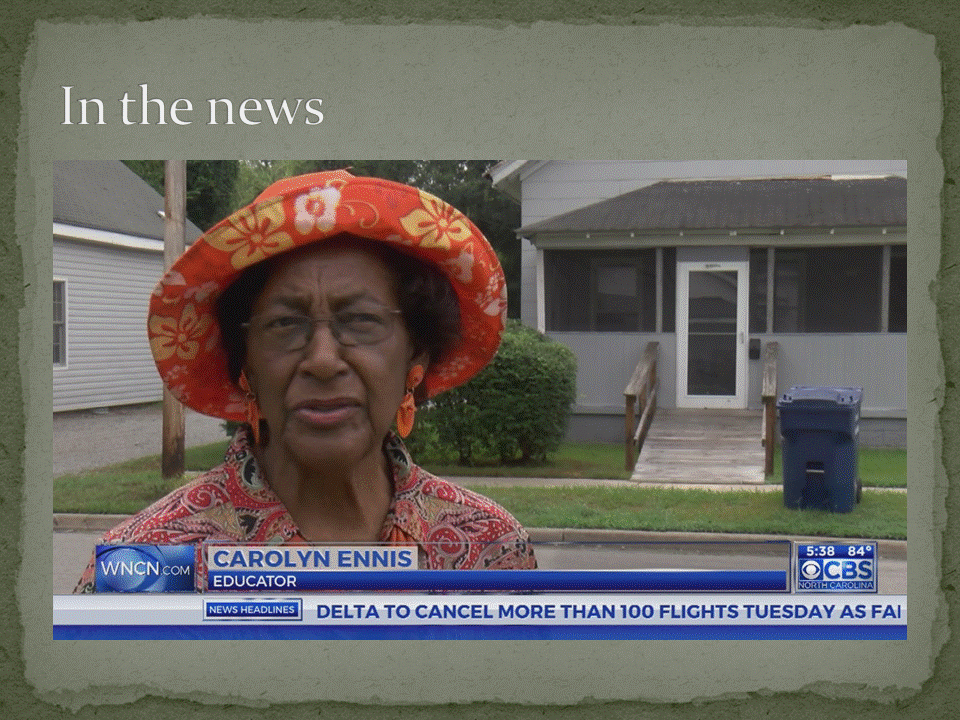
In the News
Carolyn Ennis, Educator
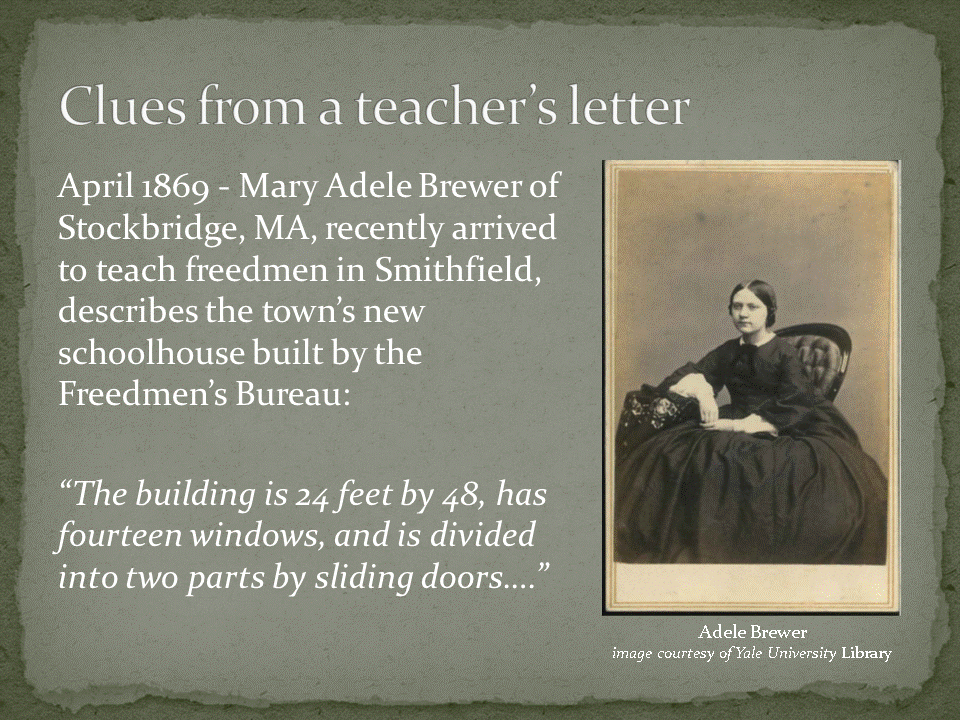
Clues from a Teacher's Letter
April 1869 - Mary Adele Brewer of Stockbridge, MA, recently arrived to teach freedmen in Smithfield, describes the town's new schoolhouse built by the Freedmen's Bureau:
"The building is 24 feet by 48 feet, has 14 windows and is divided into two parts by sliding doors..."
The image of Adele Brewer is courtesy of the Yale University Library
First School for Freedmen, 1866
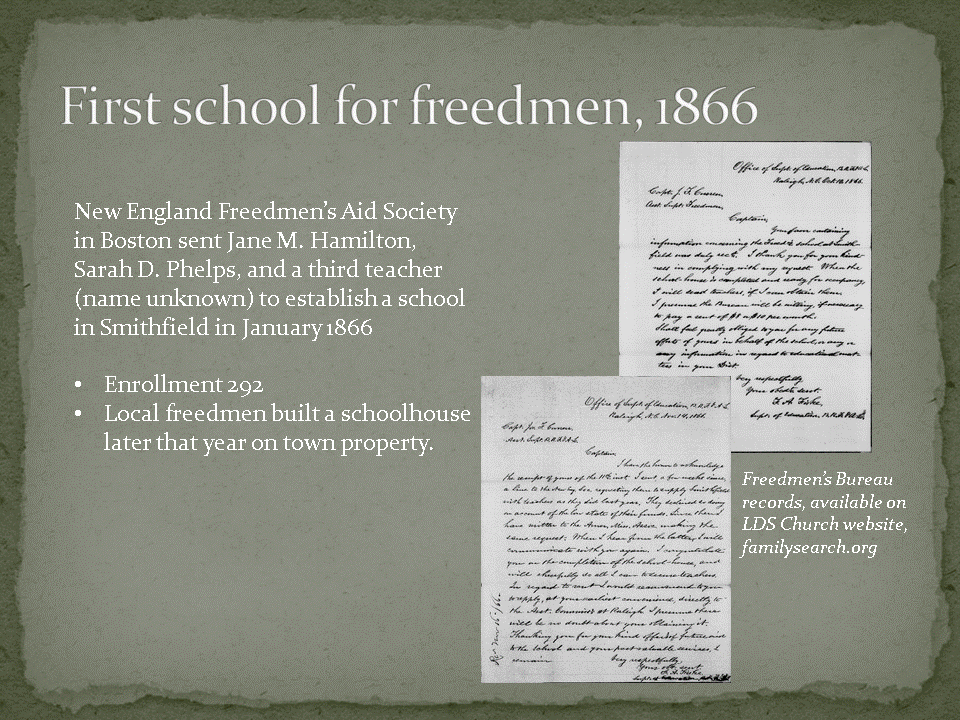
New England Freedmen's Aid Society in Boston sent Jane M. Hamilton, Sarah D. Phelps, and a third teacher (name unknown) to establish a school in Smithfield in January 1866.
- Enrollment 292
- Local freedmen built a schoolhouse later that year on town property.
The Freedmen's Bureau records shown on the slide are available on the LDS Church website, familysearch.org
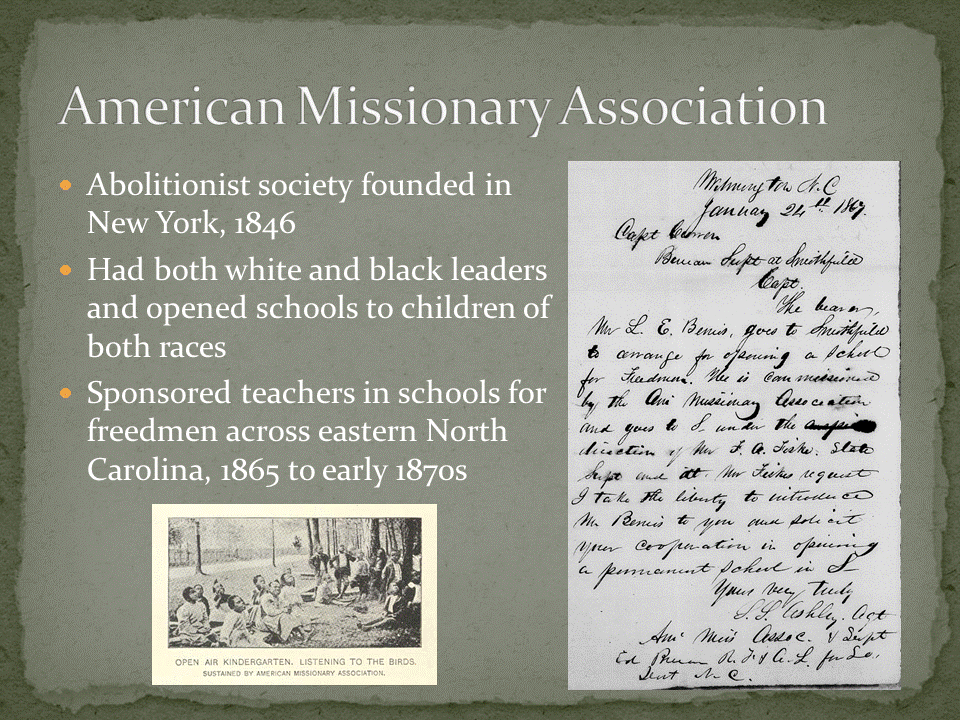
American Missionary Association
The Abolitionist society was founded in New York in 1846. It had both white and black leaders and opened schools to children of both races. The society sponsored teachers in schools for freedmen across eastern North Carolina from 1865 to the early 1870s.
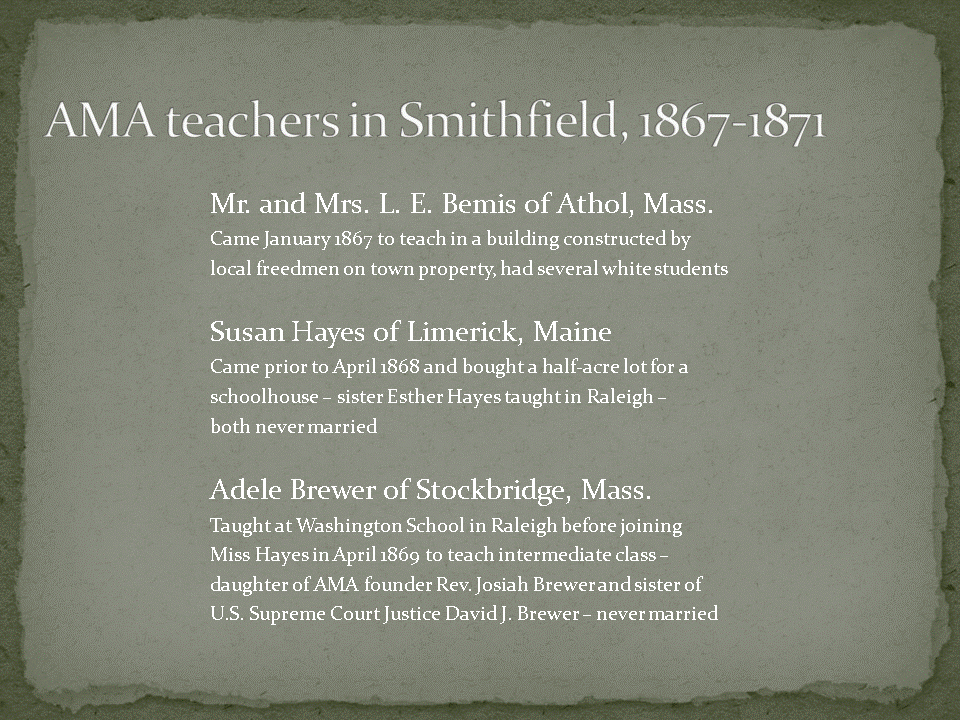
AMA Teachers in Smithfield, 1867-1871
- Mr. and Mrs. L. E. Bemis of Athol, Massachusetts - Came January 1867 to teach in a building constructed by local freedmen on town property. They had several white students.
- Susan Hayes of Limerick, Maine - Came prior to April 1868 and bought half-acre lot for a schoolhouse - sister Esther Hayes taught in Raleigh. Both never married.
- Adele Brewer of Stockbridge, Massachusetts - Taught at Washington School in Raleigh before joining Miss Hayes in April 1869 to teach intermediate class. Adele was the daughter of AMA founder Rev. Josiah Brewer, and sister of U.S. Supreme Court Justice David J. Brewer. Adele never married.
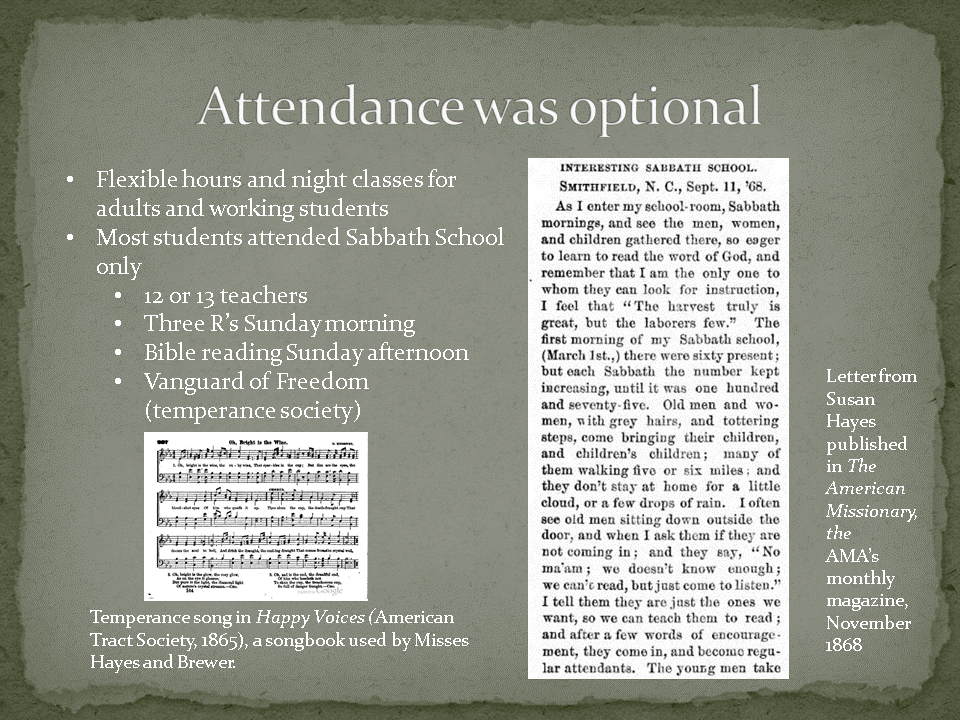
Attendance was optional
AMA Teachers in Smithfield, 1867 to 1871
- Flexible hours and night classes for adults and working students.
- Most students attended Sabbath School only
- 12 or 13 teachers
- Three R's Sunday morning
- Bible reading Sunday afternoon
- Vanguard of Freedom (temperance society)
- Image shown is the Temperance song in Happy Voices (American Tract Society, 1865), a songbook used by Misses Hayes and Brewer.
An integrated school, albeit brief
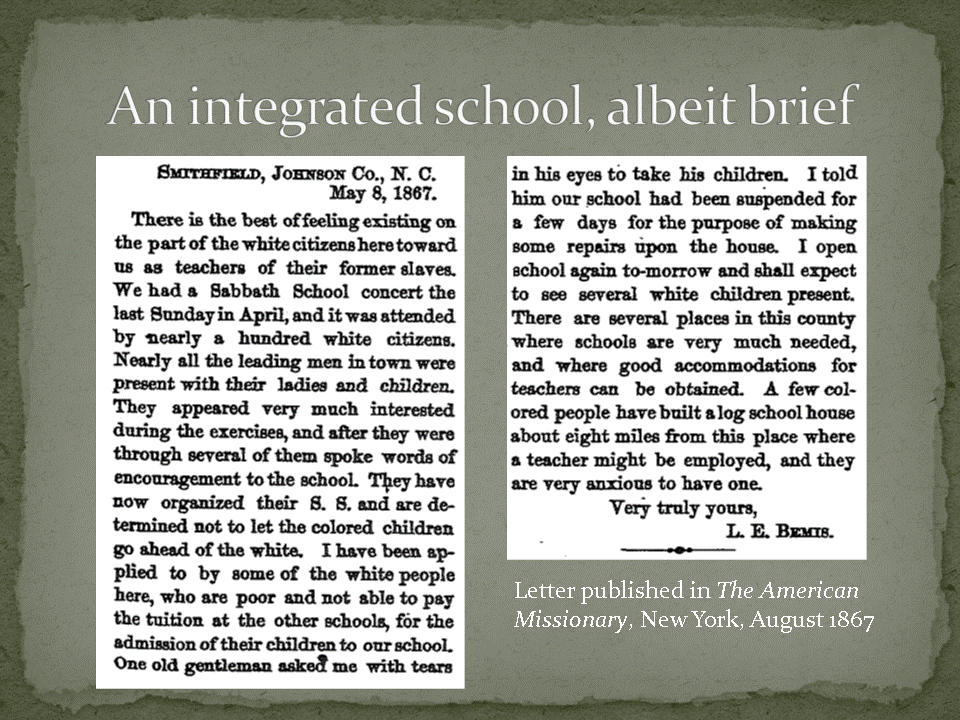
The letter below was published in The American Missionary, New York, August 1867:
Letter written in Smithfield, Johnston County, North Carolina, on May 8, 1867:
There is the best of feeling existing on the part of the white citizens here toward us as teachers of their former slaves. We had a Sabbath School concert the last Sunday in April, and it was attended by nearly a hundred white citizens. Nearly all the leading men in town were present with their ladies and children. They appeared very much interested during the exercises, and after they were through several of them spoke words of encouragement to the school. They have now organized their S. S. and are determined not to let the colored children go ahead of the white. I have been applied to by some of the white people here, who are poor and not able to pay the tuition at the other schools, for the admission of their children to our school. One old gentleman asked me with tears in his eyes to take his children. I told him our school had been suspended for a few days for the purpose of making some repairs upon the house. I open school again to-morrow and shall expect to see several white children present. There are several places in this county where schools are very much needed, and where good accommodations for teachers can be obtained. A few colored people have built a log school house about eight miles from this place where a teacher might be employed, and they are very anxious to have one.
Very truly yours, L. E. Bemis
A more permanent location
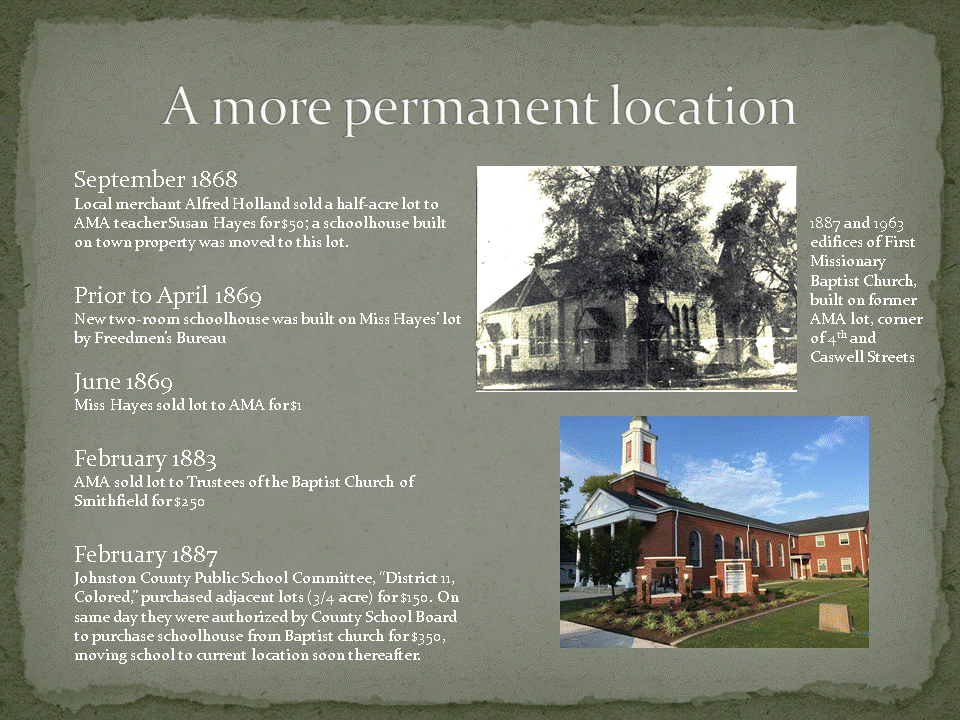
September 1868
Local merchant Alfred Holland sold a half-acre lot to AMA teacher Susan Hayes for $50; a schoolhouse built on town property was moved to this lot.
Prior to April 1869
New two-room schoolhouse was built on Miss Hayes' lot by the Freedmen's Bureau.
June 1869
Miss Hayes sold to to AMA for $1.
February 1883
AMA sold lot to Trustees of the Baptist Church of Smithfield for $250.
February 1887
Johnston County Public School Committee, "District 11, Colored," purchased adjacent lots (3/4 acre) for $150. On same day they were authorized by
County School Board to purchase schoolhouse from Baptist church for $350, moving school to current location soon thereafter.
The two images shown are the 1887 and 1963 edifices of the First Missionary Baptist Church, built on former AMA lot, at the corner of 4th and Caswell Streets.
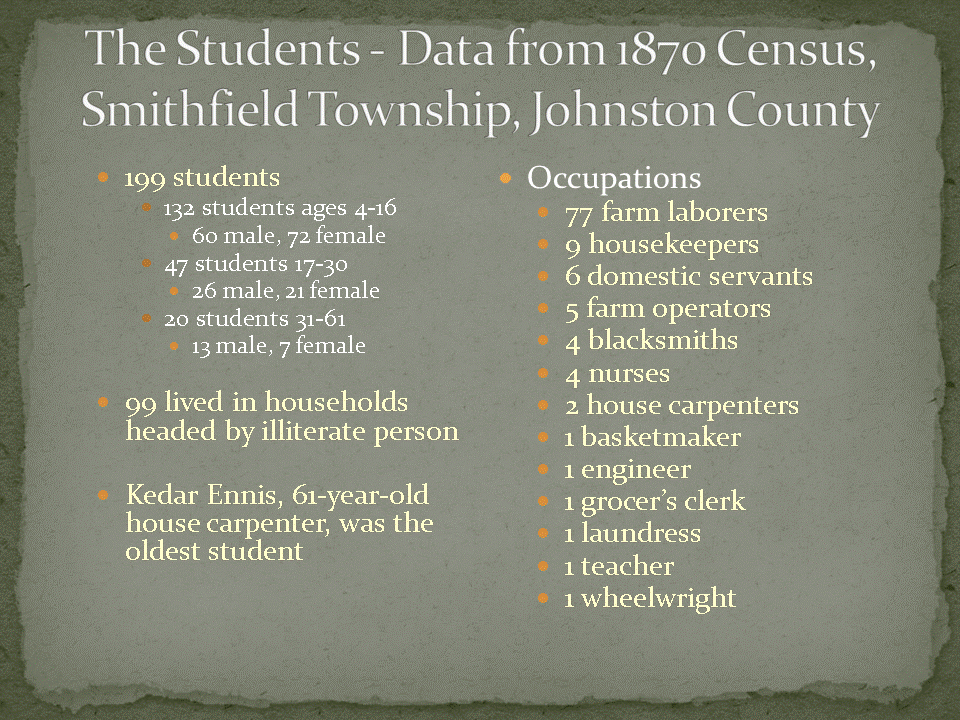
The Students - Data from 1870 Census, Smithfield Township, Johnston County
- 199 students
- 132 students ages 4-16, 60 male, 72 female
- 47 students 17-30, 26 male, 21 female
- 20 students 31-61, 13 male, 7 female
- 99 lived in households head by an illiterate person
- Kedar Ennis, 61-year-old house carpenter, was the oldest student
- Occupations:
- 77 farm laborers
- 9 housekeepers
- 6 domestic servants
- 5 farm operators
- 4 blacksmiths
- 4 nurses
- 2 house carpenters
- 1 basketmaker
- 1 engineer
- 1 grocer's clerk
- 1 laundress
- 1 teacher
- 1 wheelwright
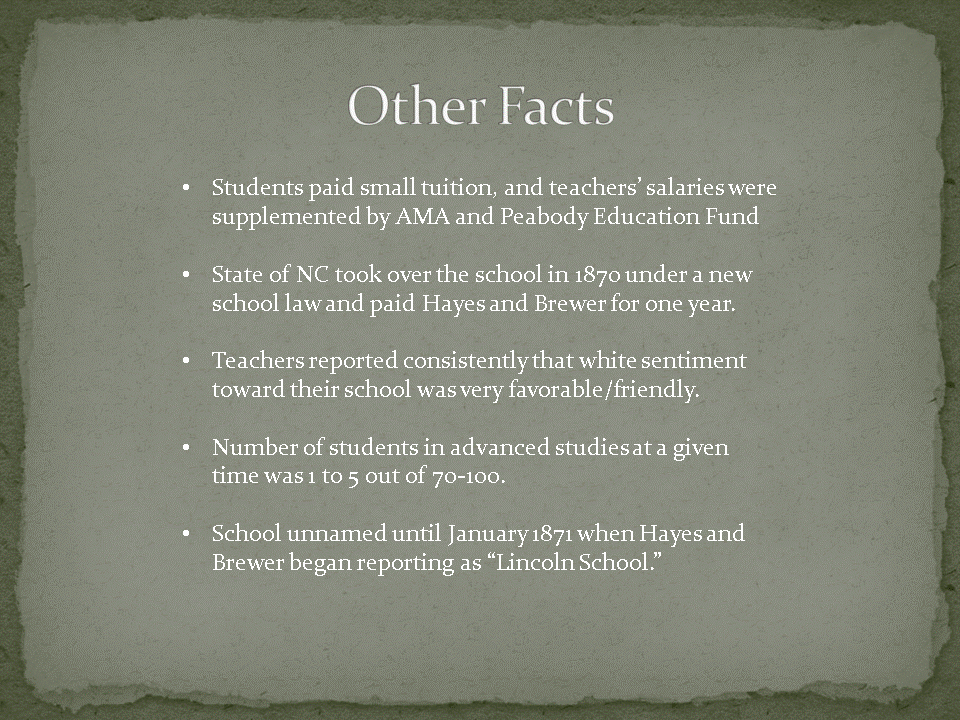
Other facts
- Students paid small tuition, and teachers' salaries were supplemented by AMA and Peabody Education Fund.
- The State of North Carolina took over the school in 1870 under a new school law and paid Hayes and Brewer for one year.
- Teachers reported consistently that white sentiment twoard their school was very favorable and friendly.
- The number of students in advanced studies at a given time was 1 to 5 out of 70 to 100.
- The school remained unnamed until January 1871 when Hayes and Brewer began reporting as "Lincoln School."
"John Byrd's School"
- John W. Byrd (1856-1927), born a slave near Clayton, North Carolina, received teacher training in the Normal Department of Shaw University, 1879 to 1882.
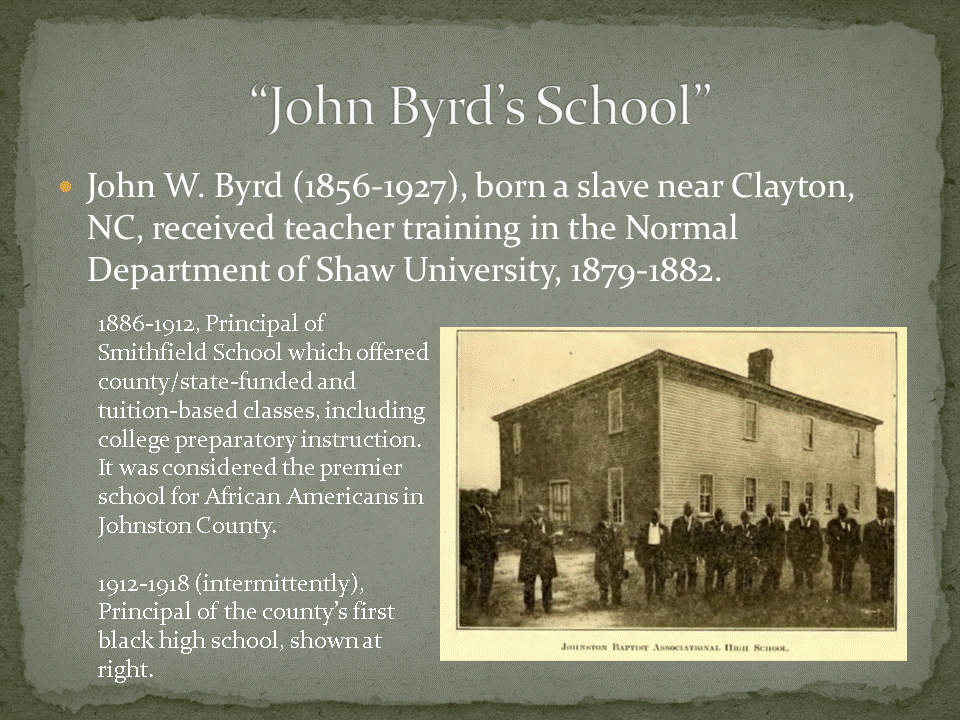
- 1886-1912. Principal of Smithfield School which offered country/state-funded and tuition-based classes, including college preparatory instruction. It was considered the premier school for African Americans in Johnston County.
- 1912-1918 (intermittently), Principal of the county's first black high school, shown in the image.
A family home place
- 1913
The Johnston County Board of Education sold the school property to W. M. Sanders, and it was remodeled to serve as a private residence. - 1977
Smithfield's Bicentennial celebration inspired creation of a local Historic Properties Commission. A small historical marker was placed in front of the building identifying it as a former school for African Americans where John W. Byrd taught, although its earlier history had been forgotten. - 2002
Research for a Black History exhibit in the Johnston County Heritage Center uncovered evidence in the American Missionary Association's records at Tulane University that the schoolhouse predated John Byrd's tenure and was built by the Freedmen's Bureau under the auspices of the AMA in 1869. - 2010
Measurement-taking and a site visit by Jeff Adolphsen and Claudia Brown of the State Preservation Office confirmed suspicion about the building's origins. - 2016
The former school property and adjacent lot were purchased by First Missionary Baptist Church from 14 heirs whose family had owned it since 1946.
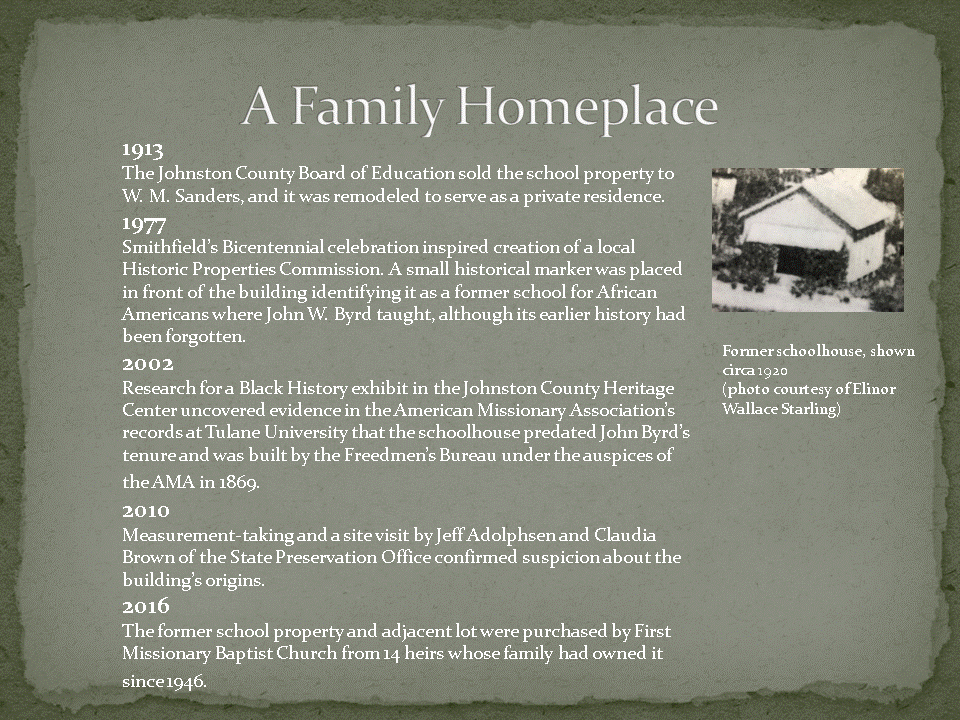
Shown in the photo, is the former schoolhouse circa 1920. Photo shown, courtesy of Elinor Wallace Starling.
The Hayes and Byrd Legacies
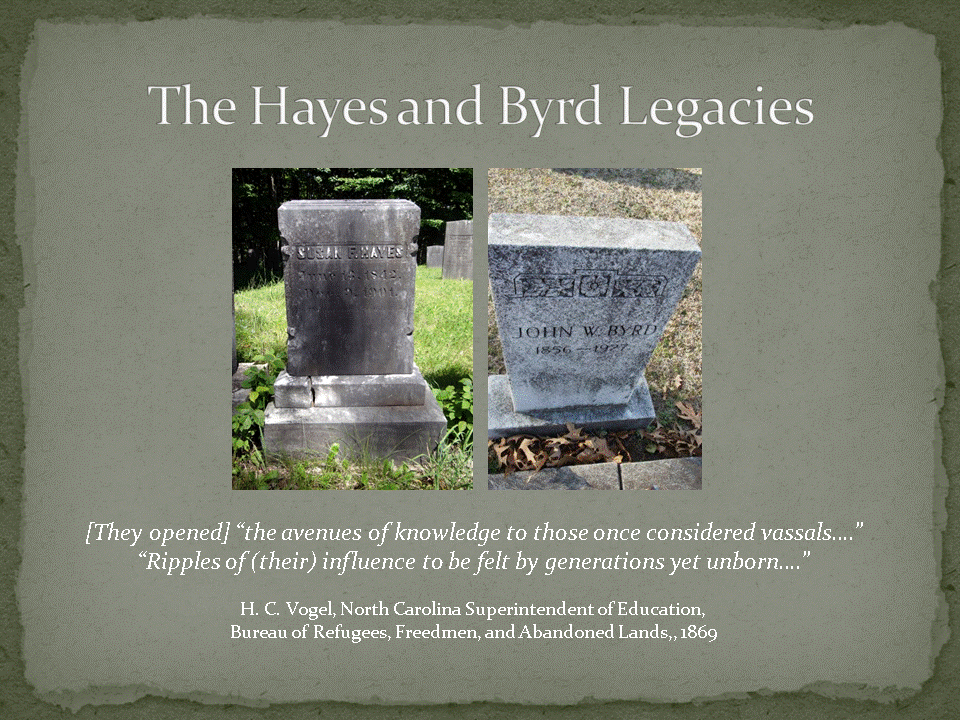
Two images are on the slide showing the gravestones of Susan Hayes and John W. Byrd. In 1869, H. C. Vogel, the North Carolina Superintendent of
Education, Bureau of Refugees, Freedmen and Abandoned Lands, made the following quote:
[They opened] "the avenues of knowledge to those once considered vassals..."
"Ripples of (their) influence to be felt by generations of yet unborn..."
New opportunties for an old building
- Restoration to its 1869 appearance.
- Adaptive uses include meeting space, classes and tours.
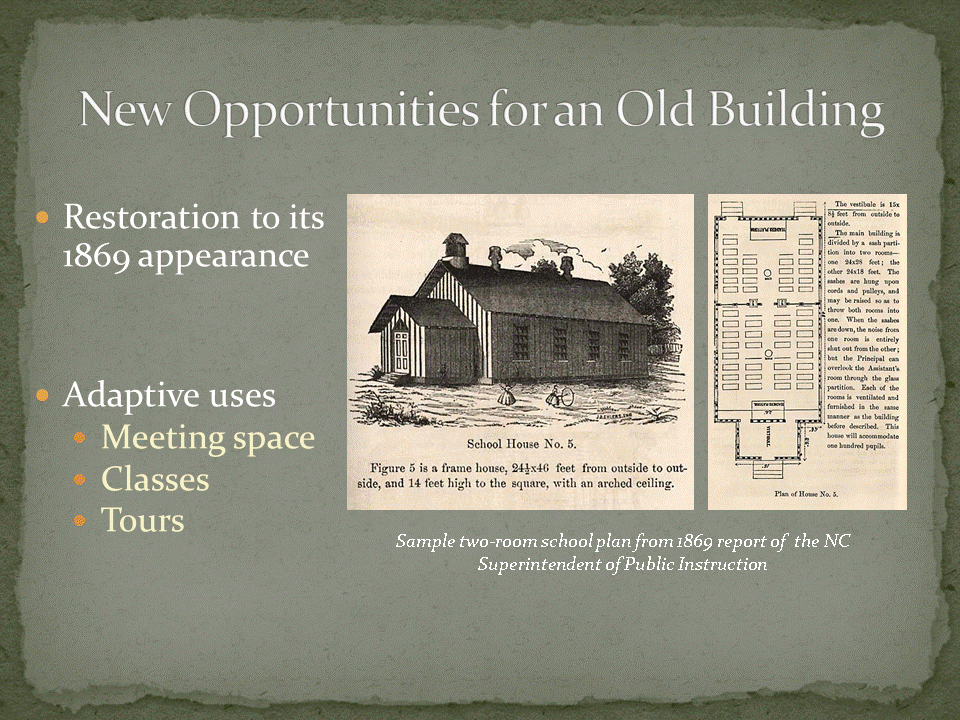
Images shown on the slide are a sample two-room school plan from the 1869 report of the North Carolina Superintendent of Public Instruction.